With four children, we’d always made good use of the third row in our 5+2 car. But as the kids grew bigger and edged into their teenage years, those extra seats — really only suitable for younger children — were starting to feel more cramped than comfortable. We knew that if we wanted a car to last us through the next stage of family life, it needed to be a proper, spacious 7-seater.
At the same time, our current car had reached the end of the road. It was developing serious problems and couldn’t be repaired, so we were left with no choice but to start looking for its replacement. The decision suddenly became very real: what family car would tick all the boxes for space, comfort, and practicality, and serve us well for years to come?
Defining Our Priorities
When it came to choosing our next car, we wanted to keep the decision-making process simple. With so many models and options out there, it would have been easy to get lost in the details — but for us, there were three absolute must-haves:
- Budget: Whatever we chose had to be affordable and realistic for our family. There was no point in falling in love with a car that would stretch us too far financially.
- ULEZ compliance: Living with London’s Ultra Low Emission Zone meant we couldn’t consider anything that didn’t meet the standards. This ruled out a lot of older diesel models straight away.
- Full-size third row seats: With four children, the “occasional use” seats in our old car were no longer good enough. We needed a proper seven-seater with third row seats designed for growing teenagers, not just small children.
Beyond those three essentials, everything else was a nice-to-have. Extra tech, styling details, boot gadgets, or even the make and model itself were all secondary to the basics of space, compliance, and affordability.
The Longlist
I’d already done a lot of research into spacious 7-seaters (you can read my guide to the most spacious 7-seater cars in the UK) so that formed the starting point for our search. It gave us a clear idea of which models offered the comfort and space we needed, especially in the third row.
Of course, not every car on that list was realistic for us. Some of the most appealing options were simply beyond our budget. If money had been no object, my dream choice would have been the Ford Tourneo Custom — the space and flexibility it offers is incredible for a big family. But with cost as our biggest limiting factor, we had to be pragmatic and focus only on the models that struck a balance between affordability, practicality, and our must-have features.
Narrowing It Down
Once we’d ruled out the cars that were either too expensive or didn’t meet our must-have criteria, we were left with a more manageable shortlist of three:
- Peugeot Rifter
- Volkswagen Sharan
- Ford Galaxy
At this point, we realised how important it was to go and see the cars in person before setting our hearts on a particular model. What looks like the strongest contender on paper can quickly fall down the list once you sit in it, check the space, and imagine day-to-day life inside. In fact, the car that seemed to be our frontrunner ended up being ruled out almost immediately after viewing — but more on that in the next section.
Peugeot Rifter

On paper, the Peugeot Rifter seemed like the ideal car for us. With its no-frills interior and practical design, it looked like a solid option for a large, busy family who planned to keep the car for as long as possible. The budget side also worked in its favour — compared to many other 7-seaters, the Rifter sits at a lower price point, which meant we could realistically look at models only a few years old without breaking the bank.
But once we went to see it in person, the reality didn’t match the promise. Sitting in the third row made it immediately clear that this space wouldn’t work for our growing teenagers. There’s no proper footwell, the seats are set low to the ground, and your knees end up pushed up high, which quickly becomes uncomfortable. For younger children it might work fine, but for us, it was a dealbreaker.
Volkswagen Sharan
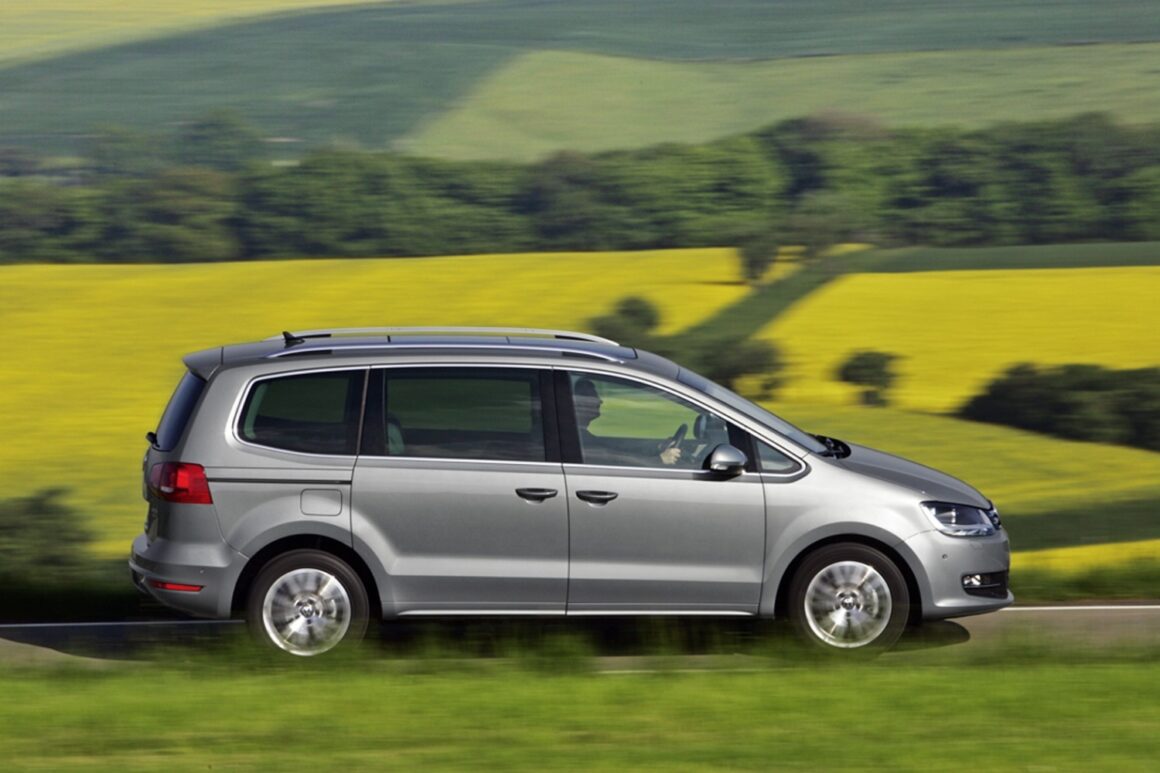
The Volkswagen Sharan felt like a real step up when it came to the third row. Unlike the Rifter, the seats here are full-sized and raised properly off the ground, making them comfortable even for most adults. For day-to-day family life, this layout was a big tick in the box.
The trade-off, however, is headroom. Because the seats are positioned higher, taller adults may find their heads very close to the roof — over six foot, and you’ll definitely feel it (watch out for speed bumps!). Our children aren’t there yet, but with four boys and some tall genes in the family, it’s only a matter of time. Since we were hoping our next car would last us many years, this gave us pause.
That said, one of the reassuring things about the Sharan is its reputation. Several mechanics we spoke to mentioned that Sharans are solidly built and have the potential to run well even at high mileage, which made it an attractive option.
It’s worth noting that Volkswagen no longer makes the Sharan, so if you want one, you’ll need to look at the second-hand market.
Ford Galaxy
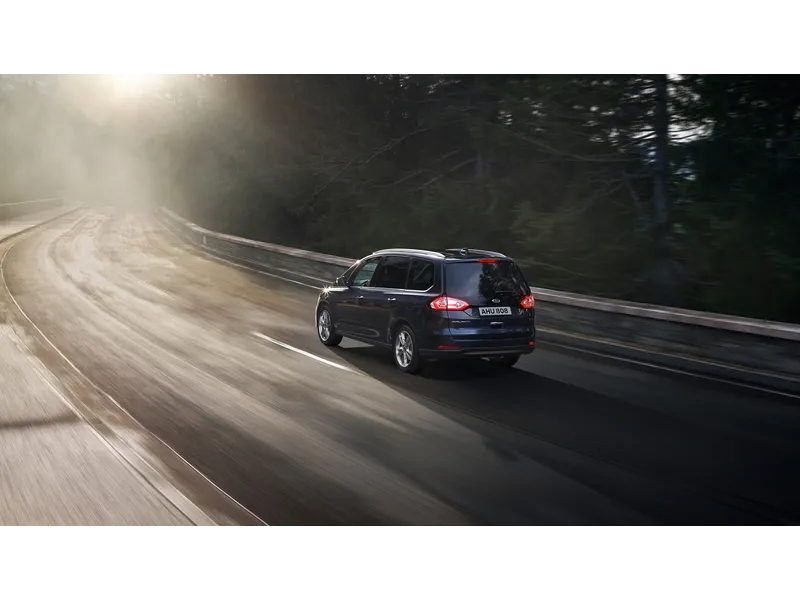
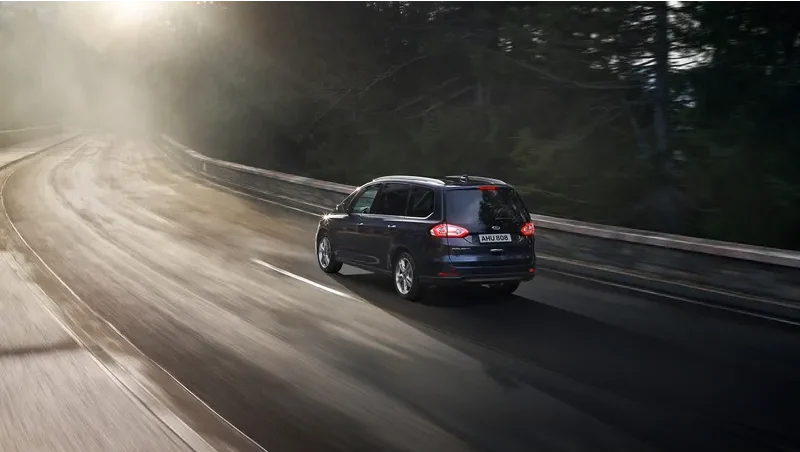
The Ford Galaxy offered something of a middle ground between our other two contenders. The third-row seats are set slightly lower than in the Sharan, but much more comfortable than the Rifter’s. They’re adult-friendly while still leaving plenty of headroom thanks to the Galaxy’s taller, boxier rear shape — a real plus for growing children (and future tall teenagers).
Our hesitation came not from the seating, but from the gearbox. Having just lived through serious automatic gearbox problems with our S-Max, the idea of committing to another Ford automatic gave us pause. The Galaxy we were looking at was a newer model with an updated transmission system, one that replaced the troublesome generation we’d had so many issues with. But the question lingered: would we really put our trust in a Ford gearbox again?
Note: Ford has now discontinued the Galaxy, so — like the Sharan — you’ll only find it on the second-hand market.
The Decision
In the end, it really came down to value for money. After all the research, test drives, and back-and-forth, we found two second-hand options that fit our criteria: a Volkswagen Sharan and a Ford Galaxy.
The Sharan was priced at around £12,000 with 70,000 miles on the clock. The Galaxy, on the other hand, came in slightly higher at £14,000, but with just 50,000 miles. Crucially, it was a good few years newer than the Sharan — and it came with a higher spec, including extras like a reverse parking camera and heated leather seats.
With all that in mind, we opted for the Ford Galaxy. It felt like the car that would give us the most for our money, and so far, we’ve been pleased with the decision. We’ve only had it for a year, so time will tell on the reliability front, but the older children are happy with their space in the third row, and it’s already seen us through several camping trips and a 2,000 km+ road trip to the south of France.

What We Learned
If this process taught us anything, it’s that choosing a family car isn’t just about what looks good on paper. Specs, seat counts, and mileage all matter, but until you actually sit in the car, climb into the third row, and imagine living with it day to day, you don’t really know if it will work for your family.
For us, narrowing it down to our absolute must-haves made the search less overwhelming. Everything beyond that — the tech features, trim levels, or even the brand — became secondary once we knew the car could comfortably seat four growing children and fit into our budget.
Most importantly, we learned that there’s rarely a “perfect” choice. It’s about balancing priorities, being realistic about compromises, and choosing the car that feels like the best fit for your family right now — with an eye to how it will work for you in the years ahead. Because at the end of the day, it should be the car that fits your family — not your family trying to fit around the car.


